Make Fun Of Life!
  • Learning
    • Activities
    • Printables
    • Foods
    • Alphabet
    • Numbers
    • Time
    • English Grammar
    • Elocution
    • Colors
    • Games Puzzles Riddles
  • Holidays
    • New Year's Day
    • Groundhog Day
    • Valentine's Day
    • Saint Patrick's Day
    • Easter
    • Arbor Day And Trees
    • Halloween
    • Thanksgiving Day
    • Christmas
    • Birthdays
  • Inspiration
    • Everyday Inspiration
    • Personal Development
    • Health And Fitness
    • Christian Faith
    • Christian Quotations
    • Work
    • Disability
  • Library
    • Adventure
    • Fairy Tales
    • Mysteries
    • Horror
    • Stories With Morals
    • Quotations
    • Picture Quotations
    • Quotation Collections
    • Nursery Rhymes
    • Essays
    • Correspondence
    • Free Pictures
  • Life
    • Childhood
    • Friendship
    • Adulthood
    • Marriage
    • Family
    • Parenting
    • Generations
    • In Memory
  • Serious
    • Serious Topics
    • Sleep
    • Serious Poems
    • Child Abuse
    • Biographies
    • Website Index
    • Website Information
  • Silly
    • Silly Songs
    • Nonsense
    • Picture Jokes
    • Limericks
    • Fake News
    • Beaumont's Bits
  • Society
    • Being Human
    • Social-Moral Conduct
    • Biography
    • Geography
    • History
    • Americana
  • World
    • Animals
    • Plants
    • Nature
    • Seasons
    • Weather

The Golden Touch

4/19/2018

0 Comments

 
Picture
The Golden Touch
 
Many years ago there lived a king named Midas.

King Midas had one little daughter, whose name was Marigold.

King Midas was very, very rich. It was said that he had more gold than any other king in the world.

One room of his great castle was almost filled with yellow gold pieces.

At last the king grew so fond of his gold that he loved it better than anything else in all the world.

He even loved it better than his own little daughter, dear little rosy-cheeked Marigold. His one great wish seemed to be for more and more gold.

One day while he was in his gold room counting his money, a fairy stood before him.

The fairy’s face shone with a wonderful light, and he had wings on his cap and wings on his feet. In his hand he carried a strange-looking wand, and the wand also had wings.

“Midas, you are the richest man in the world,” said the fairy. “There is no king who has so much gold as you.”

“That may be,” said the king. “As you see, I have this room full of gold, but I should like much more; for gold is the best and the most wonderful thing in the world.”

“Are you sure?” asked the fairy.

“I am very sure,” answered the king.

“If I should grant you one wish,” said the fairy, “would you ask for more gold?”

“If I could have but one wish,” said the king, “I would ask that everything I touched should turn to beautiful yellow gold.”

“Your wish shall be granted,” said the fairy “At sunrise to-morrow morning your slightest touch will turn everything into gold. But I warn you that your gift will not make you happy.”

“I will take the risk,” said the king.
 
The next morning King Midas awoke very early. He was eager to see if the fairy’s promise had come true.

As soon as the sun arose he tried the gift by touching the bed lightly with his hand.

The bed turned to gold.

He touched the chair and table.

Upon the instant they were turned to solid gold.

The king was wild with joy.

He ran around the room, touching everything he could see. His magic gift turned all to shining, yellow gold.

The king soon felt hungry and went down to eat his breakfast. Now a strange thing happened. When he raised a glass of clear cold water to drink, it became solid gold.

Not a drop of water could pass his lips.

The bread turned to gold under his fingers.

The meat was hard, and yellow, and shiny.

Not a thing could he get to eat.

All was gold, gold, gold.

His little daughter came running in from the garden.

Of all living creatures she was the dearest to him.

He patted her softly on the head.

At once the little girl was changed into a golden statue.

A great fear crept into the king’s heart, sweeping all the joy out of his life.

In his grief he called and called upon the fairy who had given him the gift of the golden touch.

“O fairy,” he begged, “take away this horrible golden gift! Take all my lands. Take all my gold. Take everything, only give me back my little daughter.”

In a moment the beautiful fairy was standing before him.

“Do you still think that gold is the greatest thing in the world?” asked the fairy.

“No! no!” cried the king. “I dislike the very sight of the yellow metal.”

“Are you sure that you no longer wish the golden touch?” asked the fairy.

“I have learned my lesson,” said the king. “I no longer think gold the greatest thing in the world.”

“Very well,” said the fairy, “take this pitcher to the spring in the garden and fill it with water. Then sprinkle those things which you have touched and turned to gold.”

The king took the pitcher and rushed to the spring. Running back, he first sprinkled the head of his dear little girl. Instantly she became his own darling Marigold again.

The king sprinkled the golden food, and to his great joy it turned back to real bread and real butter.

Then he and his little daughter sat down to breakfast. How good the cold water tasted. How eagerly the hungry king ate the bread and butter, the meat, and all the good food.

The king disliked his golden touch so much that he sprinkled even the chairs and the tables and everything else that the fairy’s gift had turned to gold.

by Author Unknown
 
Is the moral of the story, “Be careful what you wish for, because you just might get it,” or “Some things are more important than gold and riches”?
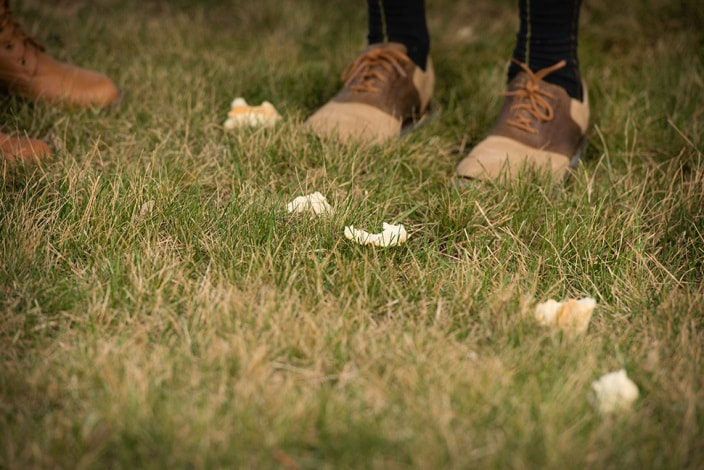
0 Comments

Hansel and Gretel

2/25/2018

0 Comments

 
Picture
Hansel and Gretel
 
Hard by a great forest dwelt a poor wood-cutter with his wife and his two children. The boy was called Hansel and the girl Gretel. He had little to bite and to break, and once, when great dearth fell on the land, he could no longer procure even daily bread.
 
Now when he thought over this by night in his bed, and tossed about in his anxiety. He groaned and said to his wife, “What is to become of us? How are we to feed our poor children, when we no longer have anything even for ourselves?”
 
“I’ll tell you what, husband,” answered the woman, “early tomorrow morning we will take the children out into the forest to where it is the thickest. There we will light a fire for them, and give each of them one more piece of bread, and then we will go to our work and leave them alone. They will not find the way home again, and we shall be rid of them.”
 
“No, wife,” said the man, “I will not do that. How can I bear to leave my children alone in the forest? The wild animals would soon come and tear them to pieces.”
 
“Oh! you fool,” said she, “then we must all four die of hunger, you may as well plane the planks for our coffins,” and she left him no peace until he consented.
 
“But I feel very sorry for the poor children, all the same,” said the man.
 
The two children had also not been able to sleep for hunger, and had heard what their step-mother had said to their father. Gretel wept bitter tears, and said to Hansel, “Now all is over with us.”
 
“Be quiet, Gretel,” said Hansel, “do not distress yourself, I will soon find a way to help us.” and when the old folks had fallen asleep, he got up, put on his little coat, opened the door below, and crept outside.
 
The moon shone brightly, and the white pebbles which lay in front of the house glittered like real silver pennies. Hansel stooped and stuffed the little pocket of his coat with as many as he could get in. Then he went back and said to Gretel, “Be comforted, dear little sister, and sleep in peace, God will not forsake us,” and he lay down again in his bed.
 
When day dawned, but before the sun had risen, the woman came and awoke the two children, saying, “Get up, you sluggards. We are going into the forest to fetch wood.” She gave each a little piece of bread, and said, “There is something for your dinner, but do not eat it up before then, for you will get nothing else.”
 
Gretel took the bread under her apron, as Hansel had the pebbles in his pocket. Then they all set out together on the way to the forest.
 
When they had walked a short time, Hansel stood still and peeped back at the house, and did so again and again. His father said, “Hansel, what are you looking at there and staying behind for? Pay attention, and do not forget how to use your legs.”
 
“Ah, father,” said Hansel, “I am looking at my little white cat, which is sitting up on the roof, and wants to say good-bye to me.”
 
The wife said, “Fool, that is not your little cat, that is the morning sun which is shining on the chimneys.”
 
Hansel, however, had not been looking back at the cat, but had been constantly throwing one of the white pebble-stones out of his pocket on the road.
 
When they had reached the middle of the forest, the father said, “Now, children, pile up some wood, and I will light a fire that you may not be cold.”
 
Hansel and Gretel gathered brushwood together, as high as a little hill. The brushwood was lighted, and when the flames were burning very high, the woman said, “Now, children, lay yourselves down by the fire and rest, we will go into the forest and cut some wood. When we have done, we will come back and fetch you away.”
 
Hansel and Gretel sat by the fire, and when noon came, each ate a little piece of bread, and as they heard the strokes of the wood-axe they believed that their father was near. It was not the axe, however, but a branch which he had fastened to a withered tree which the wind was blowing backwards and forwards. and as they had been sitting such a long time, their eyes closed with fatigue, and they fell fast asleep.
 
When at last they awoke, it was already dark night. Gretel began to cry and said, “How are we to get out of the forest now?”
 
But Hansel comforted her and said, “Just wait a little, until the moon has risen, and then we will soon find the way.” and when the full moon had risen, Hansel took his little sister by the hand, and followed the pebbles which shone like newly-coined silver pieces, and showed them the way.
 
They walked the whole night long, and by break of day came once more to their father’s house. They knocked at the door, and when the woman opened it and saw that it was Hansel and Gretel, she said, “You naughty children, why have you slept so long in the forest? We thought you were never coming back at all.”
 
The father, however, rejoiced, for it had cut him to the heart to leave them behind alone.
 
Not long afterwards, there was once more great dearth throughout the land, and the children heard their mother saying at night to their father:
 
“Everything is eaten again, we have one half loaf left, and that is the end. The children must go, we will take them farther into the wood, so that they will not find their way out again. There is no other means of saving ourselves.”
 
The man’s heart was heavy, and he thought, “It would be better for you to share the last mouthful with your children.” The woman, however, would listen to nothing that he had to say, but scolded and reproached him. He who says a must say b, likewise, and as he had yielded the first time, he had to do so a second time also.
 
The children, however, were still awake and had heard the conversation. When the old folks were asleep, Hansel again got up, and wanted to go out and pick up pebbles as he had done before, but the woman had locked the door, and Hansel could not get out. Nevertheless he comforted his little sister, and said, “Do not cry, Gretel, go to sleep quietly, the good God will help us.”
 
Early in the morning came the woman, and took the children out of their beds. Their piece of bread was given to them, but it was still smaller than the time before. On the way into the forest Hansel crumbled his in his pocket, and often stood still and threw a morsel on the ground.
 
“Hansel, why do you stop and look round?” Said the father. “Go on.”
 
“I am looking back at my little pigeon which is sitting on the roof, and wants to say good-bye to me, answered Hansel.
 
“Fool.” Said the woman, “That is not your little pigeon, that is the morning sun that is shining on the chimney.”
 
Hansel, however, little by little, threw all the crumbs on the path. The woman led the children still deeper into the forest, where they had never in their lives been before.
 
Then a great fire was again made, and the mother said, “Just sit there, you children, and when you are tired you may sleep a little. We are going into the forest to cut wood, and in the evening when we are done, we will come and fetch you away.”
 
When it was noon, Gretel shared her piece of bread with Hansel, who had scattered his by the way. Then they fell asleep and evening passed, but no one came to the poor children.
 
They did not awake until it was dark night, and Hansel comforted his little sister and said, “Just wait, Gretel, until the moon rises, and then we shall see the crumbs of bread which I have strewn about, they will show us our way home again.”
 
When the moon came they set out, but they found no crumbs, for the many thousands of birds which fly about in the woods and fields had picked them all up. Hansel said to Gretel, “We shall soon find the way.”
 
But they did not find it. They walked the whole night and all the next day too from morning till evening, but they did not get out of the forest, and were very hungry, for they had nothing to eat but two or three berries, which grew on the ground. And as they were so weary that their legs would carry them no longer, they lay down beneath a tree and fell asleep.
 
It was now three mornings since they had left their father’s house. They began to walk again, but they always came deeper into the forest, and if help did not come soon, they must die of hunger and weariness. When it was mid-day, they saw a beautiful snow-white bird sitting on a bough, which sang so delightfully that they stood still and listened to it. and when its song was over, it spread its wings and flew away before them, and they followed it until they reached a little house, on the roof of which it alighted. and when they approached the little house they saw that it was built of bread and covered with cakes, but that the windows were of clear sugar.
 
“We will set to work on that,” said Hansel, “and have a good meal. I will eat a bit of the roof, and you Gretel, can eat some of the window, it will taste sweet.”
 
Hansel reached up above, and broke off a little of the roof to try how it tasted, and Gretel leant against the window and nibbled at the panes. Then a soft voice cried from the parlor - “Nibble, nibble, gnaw who is nibbling at my little house?” The children answered - “The wind, the wind, the heaven-born wind,” and went on eating without disturbing themselves. Hansel, who liked the taste of the roof, tore down a great piece of it, and Gretel pushed out the whole of one round window-pane, sat down, and enjoyed herself with it.
 
Suddenly the door opened, and a woman as old as the hills, who supported herself on crutches, came creeping out. Hansel and Gretel were so terribly frightened that they let fall what they had in their hands.
 
The old woman, however, nodded her head, and said, “Oh, you dear children, who has brought you here? Do come in, and stay with me. No harm shall happen to you.”
 
She took them both by the hand, and led them into her little house. Then good food was set before them, milk and pancakes, with sugar, apples, and nuts. Afterwards two pretty little beds were covered with clean white linen, and Hansel and Gretel lay down in them, and thought they were in heaven.
 
The old woman had only pretended to be so kind. She was in reality a wicked witch, who lay in wait for children, and had only built the little house of bread in order to entice them there. When a child fell into her power, she killed it, cooked and ate it, and that was a feast day with her. Witches have red eyes, and cannot see far, but they have a keen scent like the beasts, and are aware when human beings draw near. When Hansel and Gretel came into her neighborhood, she laughed with malice, and said mockingly, “I have them, they shall not escape me again.”
 
Early in the morning before the children were awake, she was already up, and when she saw both of them sleeping and looking so pretty, with their plump and rosy cheeks, she muttered to herself, that will be a dainty mouthful.
 
Then she seized Hansel with her shriveled hand, carried him into a little stable, and locked him in behind a grated door. Scream as he might, it would not help him. Then she went to Gretel, shook her till she awoke, and cried, “Get up, lazy thing, fetch some water, and cook something good for your brother, he is in the stable outside, and is to be made fat. When he is fat, I will eat him.”
 
Gretel began to weep bitterly, but it was all in vain, for she was forced to do what the wicked witch commanded. and now the best food was cooked for poor Hansel, but Gretel got nothing but crab-shells. Every morning the woman crept to the little stable, and cried, “Hansel, stretch out your finger that I may feel if you will soon be fat.”
 
Hansel, however, stretched out a little bone to her, and the old woman, who had dim eyes, could not see it, and thought it was Hansel’s finger, and was astonished that there was no way of fattening him.
 
When four weeks had gone by, and Hansel still remained thin, she was seized with impatience and would not wait any longer.
 
“Now, then, Gretel,” she cried to the girl, “stir yourself, and bring some water. Let Hansel be fat or lean, to-morrow I will kill him, and cook him.”
 
Ah, how the poor little sister did lament when she had to fetch the water, and how her tears did flow down her cheeks. “Dear God, do help us,” she cried. “If the wild beasts in the forest had but devoured us, we should at any rate have died together.”
 
“Just keep your noise to yourself,” said the old woman, “it won’t help you at all.”
 
Early in the morning, Gretel had to go out and hang up the cauldron with the water, and light the fire.
 
“We will bake first,” said the old woman, “I have already heated the oven, and kneaded the dough.” She pushed poor Gretel out to the oven, from which flames of fire were already darting. “Creep in,” said the witch, “and see if it properly heated, so that we can put the bread in.” And once Gretel was inside, she intended to shut the oven and let her bake in it, and then she would eat her, too.
 
But Gretel saw what she had in mind, and said, “I do not know how I am to do it. How do I get in?”
 
“Silly goose,” said the old woman, “the door is big enough. Just look, I can get in myself.” And she crept up and thrust her head into the oven.
 
Then Gretel gave her a push that drove her far into it, and shut the iron door, and fastened the bolt. Oh. Then she began to howl quite horribly, but Gretel ran away, and the godless witch was miserably burnt to death. Gretel, however, ran like lightning to Hansel, opened his little stable, and cried, “Hansel, we are saved. The old witch is dead.”
 
Then Hansel sprang like a bird from its cage when the door was opened. How they did rejoice and embrace each other, and dance about and kiss each other. And as they had no longer any need to fear her, they went into the witch’s house, and in every corner there stood chests full of pearls and jewels.
 
“These are far better than pebbles,” said Hansel, and thrust into his pockets whatever could be got in.
 
And Gretel said, “I, too, will take something home with me,” and filled her pinafore full.
 
“But now we must be off,” said Hansel, “that we may get out of the witch’s forest.”
 
When they had walked for two hours, they came to a great stretch of water.
 
“We cannot cross,” said Hansel, “I see no foot-plank, and no bridge.
 
“And there is also no ferry,” answered Gretel, “but a white duck is swimming there. If I ask her, she will help us over.” Then she cried -
 
“Little duck, little duck, dost thou see,
 
Hansel and Gretel are waiting for thee.
 
There’s never a plank, or bridge in sight, take us across on thy back so white.”
 
The duck came to them, and Hansel seated himself on its back, and told his sister to sit by him.
 
“No,” replied Gretel, “that will be too heavy for the little duck. She shall take us across, one after the other.”
 
The good little duck did so, and when they were once safely across and had walked for a short time, the forest seemed to be more and more familiar to them, and at length they saw from afar their father’s house. Then they began to run, rushed into the parlor, and threw themselves round their father’s neck. The man had not known one happy hour since he had left the children in the forest. The woman, however, was dead. Gretel emptied her pinafore until pearls and precious stones ran about the room, and Hansel threw one handful after another out of his pocket to add to them. Then all anxiety was at an end, and they lived together in perfect happiness.
 
The tale is done, there runs a mouse, whosoever catches it, may make himself a big fur cap out of it.
 
The End
 
-A Brothers Grimm Fairy Tale
0 Comments

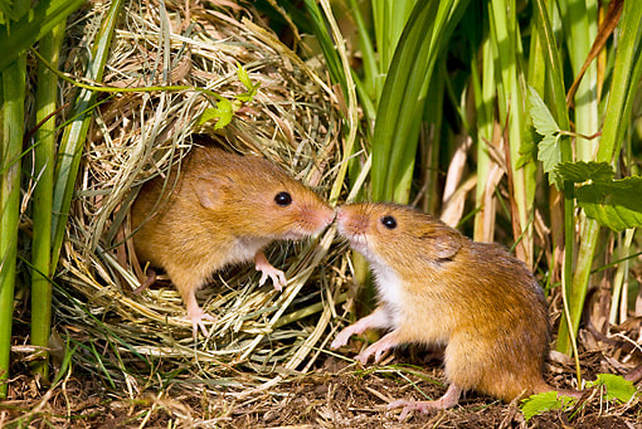
The City Mouse and the Country Mouse

2/22/2018

0 Comments

 
Picture
The City Mouse and the Country Mouse
 
Once a little mouse who lived in the country invited a little mouse from the city to visit him. When the little City Mouse sat down to dinner, he was surprised to find that the Country Mouse had nothing to eat except barley and grain.
 
“Really,” he said, “you do not live well at all; you should see how I live! I have all sorts of fine things to eat every day. You must come to visit me and see how nice it is to live in the city.”
 
The little Country Mouse was glad to do this, and after a while, he went to the city to visit his friend.
 
The very first place that the City Mouse took the Country Mouse to see was the kitchen cupboard of the house where he lived. There, on the lowest shelf, behind some stone jars, stood a big paper bag of brown sugar. The little City Mouse gnawed a hole in the bag and invited his friend to nibble for himself.  
 
The two little mice nibbled and nibbled, and the Country Mouse thought he had never tasted anything so delicious in his life. He was just thinking how lucky the City Mouse was, when suddenly the door opened with a bang, and in came the cook to get some flour.
 
“Run!” whispered the City Mouse. And they ran as fast as they could to the little hole where they had come in. The little Country Mouse was shaking all over when they got safely away, but the little City Mouse said, “That is nothing; she will soon go away and then we can go back.”
 
After the cook had gone away and shut the door they stole softly back, and this time the City Mouse had something new to show: he took the little Country Mouse into a corner on the top shelf, where a big jar of dried prunes stood open. After much tugging and pulling, they got a large dried prune out of the jar on to the shelf and began to nibble at it. This was even better than the brown sugar. The little Country Mouse liked the taste so much that he could hardly nibble fast enough. But all at once, in the midst of their eating, there came a scratching at the door and a piercing, loud, “Meow!”
 
“What is that?” said the Country Mouse. The City Mouse just whispered, “Ssh!” and ran as fast as he could to the hole.

The Country Mouse ran after, you may be sure, as fast as he could. As soon as they were out of danger, the City Mouse said, “That was the old Cat; she is the best mouser in town. If she once gets you, you are lost.”
 
“This is very terrible,” said the little Country Mouse; “let us not go back to the cupboard again.”
 
“No,” said the City Mouse, “I will take you to the cellar; there is something special there.”
 
So the City Mouse took his little friend down the cellar stairs and into a big cupboard where there were many shelves. On the shelves were jars of butter, and cheeses in bags and out of bags. Overhead hung bunches of sausages, and there were spicy apples in barrels standing about. It smelled so good that it went to the little Country Mouse’s head. He ran along the shelf and nibbled at a cheese here, and a bit of butter there, until he saw an especially rich, very delicious-smelling piece of cheese on a queer little stand in a corner. He was just on the point of putting his teeth into the cheese when the City Mouse saw him.
 
“Stop! Stop!” cried the City Mouse. “That is a trap!”
 
The little Country Mouse stopped and said, “What is a trap?”
 
“That thing is a trap,” said the little City Mouse. “The minute you touch the cheese with your teeth something comes down on your head hard, and you’re no more.”  
 
The little Country Mouse looked at the trap, and he looked at the cheese, and he looked at the little City Mouse. “If you’ll excuse me,” he said, “I think I will go home. I’d rather have barley and grain to eat and eat it in peace and comfort, than have brown sugar and dried prunes and cheese - and be frightened to death all the time!”  


So the little Country Mouse went back to his home, and there he stayed all the rest of his life.
 
The End
 
-Author Unknown
 
The moral of the story is: To each his or her own best way.
0 Comments

The Straw, the Coal, and the Bean

2/21/2018

0 Comments

 
Picture
The Straw, the Coal, and the Bean
 
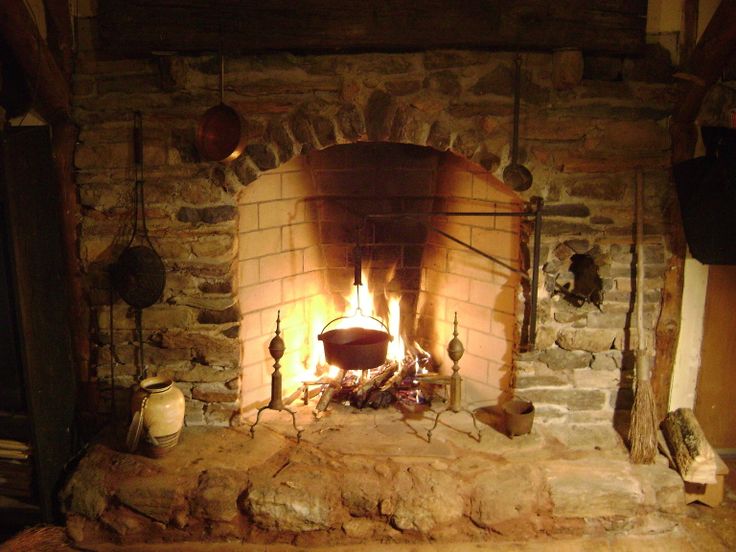
All alone, in a quiet little village, lived a poor old woman. One day she had a dish of beans, which she wanted to cook for dinner, so she made a fire on the hearth, and in order that it should burn up quickly, she lighted it with a handful of straw.
 
She hung the pot over the fire, and poured in the beans; but one fell on to the floor without her noticing it, and rolled away beside a piece of straw. Soon afterwards a live coal flew out of the fire and joined their company. Then the straw began to speak.
 
“Dear friends,” said he, “whence come you?”
 
“I was fortunate enough to spring out of the fire,” answered the coal. “Had I not exerted myself to get out when I did, I should most certainly have been burnt to ashes.”
 
“I have also just managed to save my skin,” said the bean. “Had the old woman succeeded in putting me into the pot, I should have been stewed without mercy, just as my comrades are being served now.”
 
“My fate might have been no better,” the straw told them. “The old woman burnt sixty of my brothers at once, but fortunately I was able to slip through her fingers.”
 
“What shall we do now?” said the coal.
 
“Well,” answered the bean, “my opinion is that, as we have all been so fortunate as to escape death, we should leave this place before any new misfortune overtakes us. Let us all three become traveling companions and set out upon a journey to some unknown country.”
 
This suggestion pleased both the straw and the coal, so away they all went at once. Before long they came to a brook, and as there was no bridge across it they did not know how to get to the other side; but the straw had a good idea: “I will lay myself over the water, and you can walk across me as though I were a bridge,” he said. So he stretched himself from one bank to the other, and the coal, who was of a hasty disposition, at once tripped gaily on to the newly-built bridge. Half way across she hesitated, and began to feel afraid of the rushing water beneath her. She dared go no farther, but neither would she return; but she stood there so long that the straw caught fire, broke in two, and fell into the stream. Of course, the coal was bound to follow. No sooner did she touch the water than - hiss, zish! out she went, and never glowed again.
 
The bean, who was a careful fellow, had stayed on the bank, to watch how the coal got across, before trusting himself to such a slender bridge. But when he saw what very queer figures his friends cut, he could not help laughing. He laughed and laughed till he could not stop, and at length he split his side.
 
It would have gone badly with him then, had not a tailor happened to pass by. He was a kind-hearted fellow, and at once took out his needle and thread and began to repair the mischief.
 
The bean thanked him politely, for he knew that the tailor had saved his life, but unfortunately he had used black thread, and from that time till to-day every bean has a little black stitch in its side.
 
by Author Unknown
 
We will leave it to readers to guess what, if any, moral or point this story might have.
0 Comments

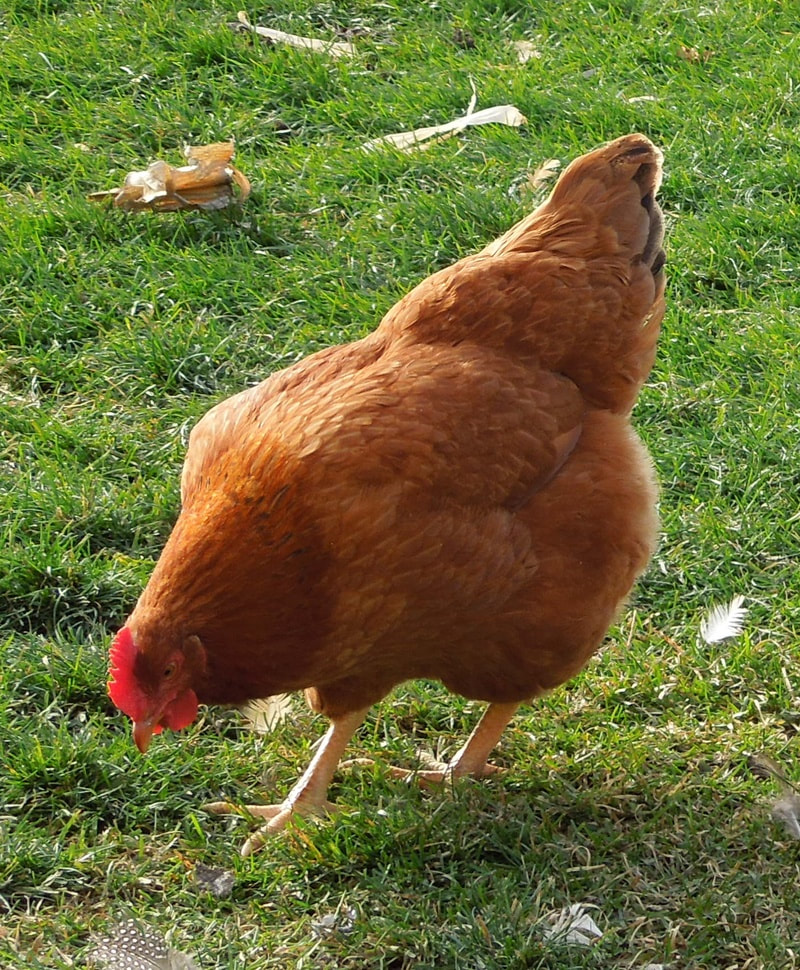
The Little Red Hen

2/18/2018

1 Comment

 
Picture
The Little Red Hen
 
There once was a little red hen who found some wheat seed. She went to her friends and asked, “Who will help me plant this wheat?”
 
“Not I,” said the rat.
“Not I,” said the cat.
“Not I,” said the dog.
“Not I,” said the pig.
 
“I will plant the wheat myself,” said the little red hen. And she did.
 
The wheat was soon ripe and ready to cut. The little red hen went to her friends and asked, “Who will help me cut this wheat?”
 
“Not I,” said the rat.
“Not I,” said the cat.
“Not I,” said the dog.
“Not I,” said the pig.
 
“I will cut the wheat myself,” said the little red hen. And she did.
 
The wheat was cut and ready to take to the miller to be ground. The little red hen went to her friends and asked, “Who will help me carry this wheat to the miller?”
 
“Not I,” said the rat.
“Not I,” said the cat.
“Not I,” said the dog.
“Not I,” said the pig.
 
“I will take this wheat to the miller myself,” said the little red hen. And she did.
 
The wheat was ground and ready to bake into bread. The little red hen went to her friends and asked, “Who will help me bake some bread?”
 
“Not I,” said the rat.
“Not I,” said the cat.
“Not I,” said the dog.
“Not I,” said the pig.
“I will bake the bread myself,” said the little red hen. And she did.
 
The bread was baked and ready to eat. The little red hen went to her friends and asked, “Who will help me eat this bread?”
 
“I will,” said the rat.
“I will,” said the cat.
“I will,” said the dog.
“I will,” said the pig.
 
“No, you will not! I will eat the bread myself,” said the little red hen. And she did.
 
by Author Unknown
 
The moral, or lesson, of the story is that those who do not work do not enjoy a reward, and those who do work enjoy a reward.
1 Comment

Jack and the Beanstalk

2/16/2018

0 Comments

 
Picture
Jack and the Beanstalk
 
Once upon a time there lived a poor widow who had an only son named Jack. She was very poor, for times had been hard, and Jack was too young to work. Almost all the furniture of the little cottage had been sold to buy bread, until at last there was nothing left worth selling. Only the good cow, Milky White, remained, and she gave milk every morning, which they took to market and sold. But one sad day Milky White gave no milk, and then things looked bad indeed.
 
“Never mind, mother,” said Jack. “We must sell Milky White. Trust me to make a good bargain,” and away he went to the market.
 
For some time he went along very sadly, but after a little he quite recovered his spirits. “I may as well ride as walk,” said he; so instead of leading the cow by the halter, he jumped on her back, and so he went whistling along until he met a butcher.
 
“Good morning,” said the butcher.
 
“Good morning, sir,” answered Jack.
 
“Where are you going?” said the butcher.
 
“I am going to market to sell the cow.”
 
“It’s lucky I met you,” said the butcher. “You may save yourself the trouble of going so far.”
 
With this, he put his hand in his pocket, and pulled out five curious-looking beans. “What do you call these?” he said.
 
“Beans,” said Jack.
 
“Yes,” said he, “beans, but they’re the most wonderful beans that ever were known. If you plant them overnight, by the next morning they’ll grow up and reach the sky. But to save you the trouble of going all the way to market, I don’t mind exchanging them for that cow of yours.”
 
“Done!” cried Jack, who was so delighted with the bargain that he ran all the way home to tell his mother how lucky he had been.
 
But oh! how disappointed the poor widow was.
 
“Off to bed with you!” she cried; and she was so angry that she threw the beans out of the window into the garden. So poor Jack went to bed without any supper, and cried himself to sleep.
 
When he woke up the next morning, the room was almost dark; and Jack jumped out of bed and ran to the window to see what was the matter. The sun was shining brightly outside, but from the ground right up beside his window there was growing a great beanstalk, which stretched up and up as far as he could see, into the sky.
 
“I’ll just see where it leads to,” thought Jack, and with that he stepped out of the window on to the beanstalk, and began to climb upwards. He climbed up and up, till after a time his mother’s cottage looked a mere speck below, but at last the stalk ended, and he found himself in a new and beautiful country. A little way off there was a great castle, with a broad road leading straight up to the front gate. But what most surprised Jack was to find a woman suddenly standing beside him.
 
“Good morning, ma’am,” said he, very politely.
 
“Good morning, Jack,” said she; and Jack was more surprised than ever, for he could not imagine how she had learned his name. But he soon found that she knew a great deal more about him than his name; for she told him how, when he was quite a little baby, his father, a gallant knight, had been slain by the giant who lived in yonder castle, and how his mother, in order to save Jack, had been obliged to promise never to tell the secret.
 
“All that the giant has is yours,” she said, and then disappeared quite as suddenly as she came.
 
“She must be a fairy,” thought Jack.
 
As he drew near to the castle, he saw the giant’s wife standing at the door.
 
“If you please, ma’am,” said he, “would you kindly give me some breakfast? I have had nothing to eat since yesterday.”
 
Now, the giant’s wife, although very big and very ugly, had a kind heart, so she said: “Very well, little man, come in; but you must be quick about it, for if my husband, the giant, finds you here, he will eat you up, bones and all.”
 
So in Jack went, and the giant’s wife gave him a good breakfast, but before he had half finished it, there came a terrible knock at the front door, which seemed to shake even the thick walls of the castle.
 
“Dearie me, that is my husband!” said the giantess, in a terrible fright, “we must hide you somehow,” and she lifted Jack up and popped him into the empty kettle.
 
No sooner had the giant’s wife opened the door than her husband roared out:
 
     “Fee, fi, fo, fum,
     I smell the blood of an Englishman;
     Be he alive, or be he dead,
     I’ll grind his bones to make my bread!”
 
“It’s a boy, I’m sure it is,” he continued. “Where is he? I’ll have him for my breakfast.”
 
“Nonsense!” said his wife; “you must be mistaken. It’s the ox’s hide you smell.” So he sat down, and ate up the greater part of the ox. When he had finished he said: “Wife, bring me my money-bags.” So his wife brought him two full bags of gold, and the giant began to count his money. But he was so sleepy that his head soon began to nod, and then he began to snore, like the rumbling of thunder. Then Jack crept out, snatched up the two bags, and though the giant’s dog barked loudly, he made his way down the beanstalk back to the cottage before the giant awoke.
 
Jack and his mother were now quite rich; but it occurred to him one day that he would like to see how matters were going on at the giant’s castle. So while his mother was away at market, he climbed up, and up, and up, and up, until he got to the top of the beanstalk again.
 
The giantess was standing at the door, just as before, but she did not know Jack, who, of course, was more finely dressed than on his first visit. “If you please, ma’am,” said he, “will you give me some breakfast?”
 
“Run away,” said she, “or my husband the giant will eat you up, bones and all. The last boy who came here stole two bags of gold - off with you!” But the giantess had a kind heart, and after a time she allowed Jack to come into the kitchen, where she set before him enough breakfast to last him a week. Scarcely had he begun to eat than there was a great rumbling like an earthquake, and the giantess had only time to bundle Jack into the oven when in came the giant. No sooner was he inside the room than he roared:
 
     “Fee, fi, fo, fum,
     I smell the blood of an Englishman;
     Be he alive, or be he dead,
     I’ll grind his bones to make my bread!”
 
But his wife told him he was mistaken, and after breakfasting off a roasted bullock, just as if it were a lark, he called out: “Wife, bring the little brown hen!” The giantess went out and brought in a little brown hen, which she placed on the table.
 
“Lay!” said the giant; and the hen at once laid a golden egg. “Lay!” said the giant a second time; and she laid another golden egg. “Lay!” said the giant a third time; and she laid a third golden egg.
 
“That will do for to-day,” said he, and stretched himself out to go to sleep. As soon as he began to snore, Jack crept out of the oven, went on tiptoe to the table, and, snatching up the little brown hen, made a dash for the door. Then the hen began to cackle, and the giant began to wake up; but before he was quite awake, Jack had escaped from the castle, and, climbing as fast as he could down the beanstalk, got safe home to his mother’s cottage.
 
The little brown hen laid so many golden eggs that Jack and his mother had now more money than they could spend. But Jack was always thinking about the beanstalk; and one day he crept out of the window again, and climbed up, and up, and up, and up, until he reached the top. This time, you may be sure, he was careful not to be seen; so he crept round to the back of the castle, and when the giant’s wife went out he slipped into the kitchen and hid himself in the oven. In came the giant, roaring louder than ever:
 
     “Fee, fi, fo, fum,
     I smell the blood of an Englishman;
     Be he alive; or be he dead,
     I’ll grind his bones to make my bread!”
 
But the giantess was quite sure that she had seen no little boys that morning; and after grumbling a great deal, the giant sat down to breakfast. Even then he was not quite satisfied, for every now and again he would say:
 
     “Fee, fi, fo, fum,
     I smell the blood of an Englishman;”
 
And once he got up and looked in the kettle. But, of course, Jack was in the oven all the time!
 
When the giant had finished, he called out: “Wife, bring me the golden harp!” So she brought in the golden harp, and placed it on the table. “Sing!” said the giant; and the harp at once began to sing the most beautiful songs that ever were heard. It sang so sweetly that the giant soon fell fast asleep; and then Jack crept quietly out of the oven, and going on tiptoe to the table, seized hold of the golden harp. But the harp at once called out: “Master! master!” and the giant woke up just in time to catch sight of Jack running out of the kitchen-door.
 
With a fearful roar, he seized his oak-tree club, and dashed after Jack, who held the harp tight, and ran faster than he had ever run before. The giant, brandishing his club, and taking terribly long strides, gained on Jack at every instant, and he would have been caught if the giant hadn’t slipped over a boulder. Before he could pick himself up, Jack began to climb down the beanstalk, and when the giant arrived at the edge he was nearly half-way to the cottage. The giant began to climb down too; but as soon as Jack saw him coming, he called out: “Mother, bring me an axe!” and the widow hurried out with a chopper. Jack had no sooner reached the ground than he cut the beanstalk right in two. Down came the giant with a terrible crash, and that, you may be sure, was the end of him. What became of the giantess and the castle nobody knows. But Jack and his mother grew very rich, and lived happy ever after.
 
by Author Unknown: as published in Hamilton Wright Mabie, Edward Everett Hale, and William Byron Forbush, editors: “Childhood’s Favorites and Fairy Stories: The Young Folks Treasury” (1927)
 
●○●○●○●○●○●○●○●○●○●○●○●○●○●○●○●○●○●○●○●○●○●○●○●○●○●○●○●○●
 
According to Charles Mackay’s book, “The Gaelic Etymology of the Languages of Western Europe” (1877): ‘Fee, fi, fo, fum’ is derived from the ancient Celts Gaelic phrase, ‘Fa fe fi fo fum’ meaning ‘Behold food, good to eat, sufficient for my hunger.’
 
Olaf: What goes, “Muf of if eef!”?

Olga: A giant walking backwards!
 
Jack and the Beanstalk Quiz
- In the fairy tale “Jack and the Beanstalk,” what did Jack receive in trade for the family cow?

- What is a giant?
- What is a giantess?
- How does the fairy tale end?
 
Gretel: On which side of the house did Jack’s beanstalk grow?
Hansel: The outside.
 
●○●○●○●○●○●○●○●○●○●○●○●○●○●○●○●○●○●○●○●○●○●○●○●○●○●○●○●○●
0 Comments

Fairy Tales

2/12/2018

0 Comments

 
Picture
Once upon a time, everyone lived happily ever after.
 
To see the newest stories, go to the top of this page, place your mouse cursor, pointer, or arrow over Library on the Menu Bar, and click on Fairy Tales. When you have a moment, be sure to explore some of the other pages shown on the Menu Bar, such as the Learning and the Inspiration pages.
 
Welcome to www.MakeFunOfLife.net . . . May your every good wish come true
!
0 Comments
Forward>>
    Today is going to be an absolutely fantastic day! You are now on the website’s Fairy Tales Page with a wide column on the left for the articles and a narrow column on the right for features such as links to more than 70 other pages. Continue down this page for more Make Fun Of Life!
    Picture of dancing letter characters spelling the words, ‘HELLO WORLD.’
    The words, ‘Believe You Can,’ over a background of a star-filled night sky, the words, ‘Make It Happen,’ over a background of green leaves on a tree, the words, ‘Learn Every Day,’ over a background of the rippling surface of blue water, the words, Enjoy Your Life,’ over a background of a blue sky with fluffy white clouds, and the words, ‘Visit www.MakeFunOfLife.net.’
    Picture of dancing letter characters spelling the word, ‘WELCOME.’
    Picture of a winged fairy sitting on the ground, contemplating a plant leaf, and the words, ‘Visit www.MakeFunOfLife.net.’
    Picture of happy smiling Sun and thick clouds, and the words, ‘Welcome One And All! You Have Arrived On www.MakeFunOfLife.net Where The Sun Shines With Bright Optimism Even From Behind The Darkest clouds.’
    Picture of dancing letter characters M, F, O, L, followed by a dancing exclamation point, standing for Make Fun Of Life! all positioned just above the music or audio controls including the on button and the off button.
    Picture
    Picture
    Further fantastically fascinating frivolity and factuality awaits you on www.MakeFunOfLife.net when you click or tap on the colorful pictures that follow below on this page.
    Click or tap here to visit the Activities Page.
    Click or tap here to visit the Adulthood Page.
    Click or tap here to visit the Adventure Page.
    Click or tap here to visit the Alphabet Page.
    Click or tap here to visit the Americana Page.
    Click or tap here to visit the Animals Page.
    Click or tap here to visit the Arbor Day Page.
    Click or tap here to visit the Beaumont’s Bits Page.
    Click or tap here to visit the Being Human Page.
    Click or tap here to visit the Biography Page.
    Click or tap here to visit the Birthdays Page.
    Click or tap here to visit the Child Abuse Page.
    Click or tap here to visit the Childhood Page.
    Click or tap here to visit the Christian Faith Page.
    Click or tap here to visit the Christian Quotations Page.
    Click or tap here to visit the Christmas Page.
    Click or tap here to visit the Colors Page.
    Click or tap here to visit the Correspondence Page.
    Click or tap here to visit the Disability Page.
    Click or tap here to visit the Easter Page.
    Click or tap here to visit the Elocution Page.
    Click or tap here to visit the English Grammar Page.
    Click or tap here to visit the Essays Page.
    Click or tap here to visit the Everyday Inspiration Page.
    Click or tap here to visit the Fairy Tales Page.
    Click or tap here to visit the Fake News Page.
    Click or tap here to visit the Family Page.
    Click or tap here to visit the Foods Page.
    Click or tap here to visit the Free Pictures Page.
    Click or tap here to visit the Friendship Page.
    Click or tap here to visit the Generations Page.
    Click or tap here to visit the Geography Page.
    Click or tap here to visit the Groundhog Day Page.
    Click or tap here to visit the Halloween Page.
    Click or tap here to visit the History Page.
    Click or tap here to visit the Holidays Page.
    Click or tap here to visit the Horror Page.
    Click or tap here to visit the In Memory Page.
    Click or tap here to visit the Inspiration Page.
    Click or tap here to visit the Learning Page.
    Click or tap here to visit the Library Page.
    Click or tap here to visit the Life Page.
    Click or tap here to visit the Limericks Page.
    Click or tap here to visit the Marriage Page.
    Click or tap here to visit the Nature Page.
    Click or tap here to visit the New Year’s Day Page.
    Click or tap here to visit the Nonsense Page.
    Click or tap here to visit the Numbers Page.
    Click or tap here to visit the Nursery Rhymes Page.
    Click or tap here to visit the Parenting Page.
    Click or tap here to visit the Personal Development Page.
    Click or tap here to visit the Physical Fitness Page.
    Click or tap here to visit the Picture Jokes Page.
    Click or tap here to visit the Picture Quotations Page.
    Click or tap here to visit the Plants Page.
    Click or tap here to visit the Quotation Collections Page.
    Click or tap here to visit the Quotations Page.
    Picture
    Picture
    Click or tap here to visit the Printables Page.
    Click or tap here to visit the Seasons Page.
    Click or tap here to visit the Serious Page.
    Click or tap here to visit the Serious Poems Page.
    Click or tap here to visit the Serious Topics Page.
    Click or tap here to visit the Silly Page.
    Click or tap here to visit the Silly Songs Page.
    Click or tap here to visit the Sleep Page.
    Click or tap here to visit the Moral Conduct Page.
    Click or tap here to visit the Society Page.
    Click or tap here to visit the Stories with Morals Page.
    Click or tap here to visit the Thanksgiving Day Page.
    Click or tap here to visit the Time Page.
    Click or tap here to visit the Valentine’s Day Page.
    Click or tap here to visit the Weather Page.
    Click or tap here to visit the Website Index Page.
    Click or tap here to visit the Website Information Page.
    Click or tap here to visit the Work Page.
    Click or tap here to visit the World Page.
    Picture
    The words, ‘“Life itself is the most wonderful fairy tale.” -Hans Christian Andersen (1805 - 1875) - Visit www.MakeFunOfLife.net.’
    Picture
    Do you need a joke, quotation, riddle, poem, or paragraph on a certain subject? Travel to the search box found at the top right corner of this page and type in the words. We have a surprisingly large variety of material, and we add new material regularly, so you may find what you are seeking. Visit www.MakeFunOfLife.net.
    Picture
    We can be right there with you, at home or wherever you go, on a desktop, laptop, tablet, cell phone, or other internet connected device. Bookmark us and visit whenever you can. We regularly add new articles just for you! Visit www.MakeFunOf Life.net.
    Picture
    Picture
    When you reach the bottom of this page simply click or tap on either Previous or Forward to see even more Make Fun Of Life!
    Picture of a happy smiling winking man with thumb up hand gesture and with blue sky and fluffy white clouds in the background.
    Welcome! You are now on Make Fun Of Life! a website on which learning, inspiration, and humor are back together again, as they were always meant to be!
    Picture of Fairy Bread.
    To discover How to Make Fairy Bread, simply click or tap on the picture of it appearing just above.
    Picture
    Picture of 3 men in an old blue convertible-top car with the driver smiling and waving and the front seat passenger standing on the seat and pointing forward. In the vehicle is a beach umbrella, an inflatable beach ball, and a surfboard. Painted on the outside of the car are the words, ‘Visit www.MakeFunOfLife.net’ with a happy smiling Sun partially obscured by a cloud.
    Picture of happy smiling Sun partially obscured by a cloud with the words, ‘Make Fun Of Life! We Just Want You To Be Happy. Visit www.MakeFunOfLife.net.’
    Picture of dancing letter characters M, F, O, L, followed by a dancing exclamation point, standing for Make Fun Of Life! all positioned just above the music or audio controls including the on button and the off button.
    Picture of green leaves surrounding the words, ‘Smile Often, Think Positively, Give Thanks.’
    Silhouette of a family standing together and the word ‘Welcome.’
To view more click or tap on
 << Previous or Forward >>
      showing just above.
Proudly powered by Weebly